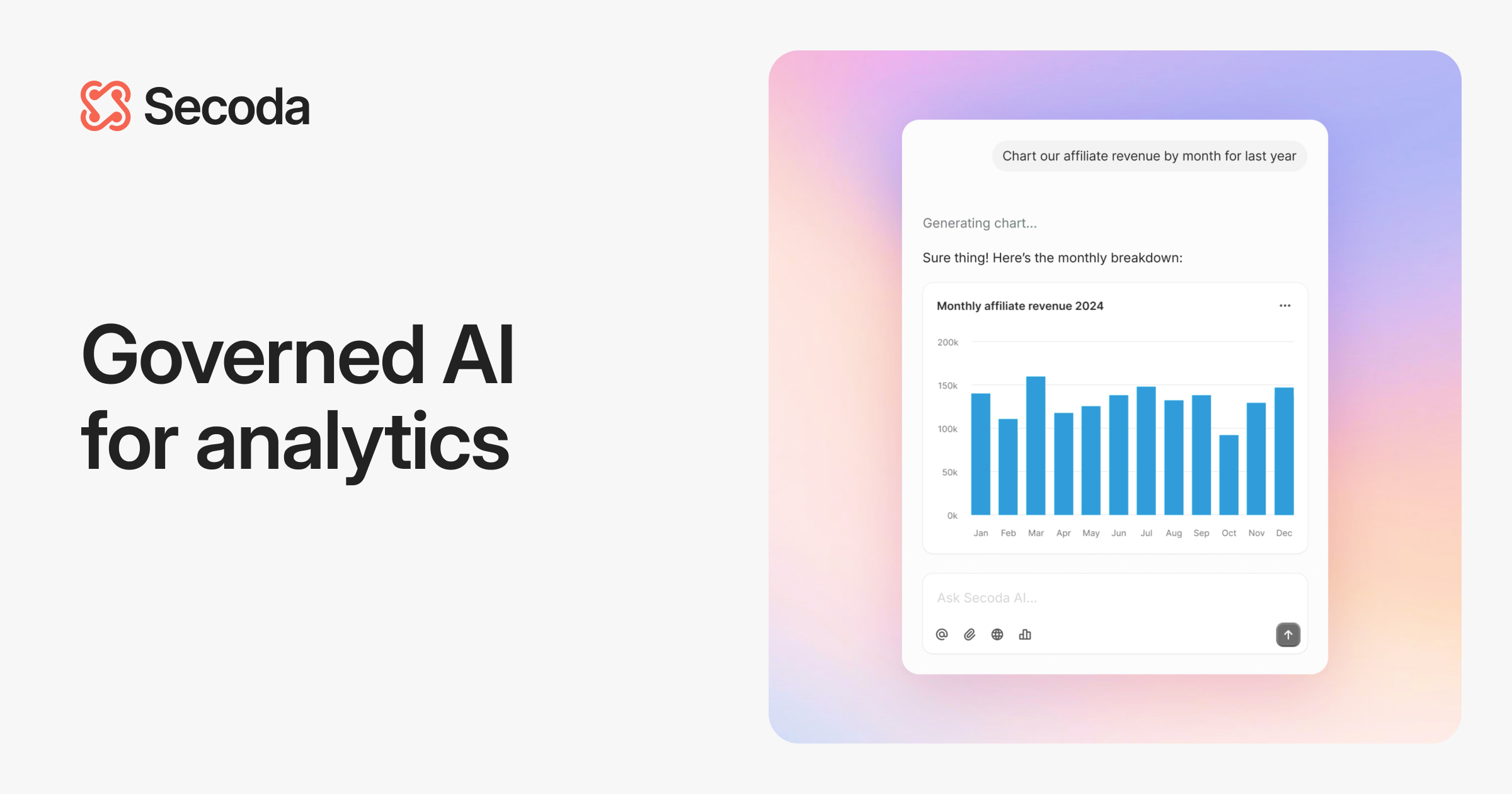
Secoda AI: Unified Data Catalog, Lineage & Governance
Secoda AI unifies data cataloging, lineage, quality monitoring, and governance into one AI-powered platform that makes data instantly accessible to every team member.
Overview
Secoda AI is an all-in-one data governance platform designed to eliminate the silos between cataloging, lineage tracing, quality monitoring, and policy enforcement. By connecting directly to your existing data warehouses, BI tools, and infrastructure, Secoda automatically builds a living map of your organization's data assets—no manual tagging or technical expertise required. This means anyone from a business operations lead to a governance manager can search, understand, and trust the data they're working with.
What sets Secoda apart is its AI-native approach to data discovery. Instead of digging through disconnected wikis or pinging data engineers with Slack questions, teams can use natural language search to instantly surface relevant tables, dashboards, and definitions. The platform layers in automated column and table-level lineage, PII scanning, and access request workflows, giving governance teams the visibility and control they need without slowing down analysts and product managers who just want answers.
Beyond discovery, Secoda extends into observability and compliance, monitoring data quality in real time and enforcing governance policies automatically. With deep integrations across Snowflake, BigQuery, Databricks, dbt, Tableau, Looker, and identity providers like Okta, it acts as a single source of truth that scales from a scrappy startup's first data catalog to an enterprise's complex, security-conscious data ecosystem.
Capabilities & Features
- Data governance
- Data catalog
- Data lineage
- Data observability
- Metadata management
- Data quality
- AI
- Data discovery
- Data compliance
- Data security
- Data monitoring
- Data CI/CD
Core Features
- AI-powered natural language data discovery and search
- Automated end-to-end data cataloging and metadata management
- Column and table-level data lineage with dbt, ETL, and test integration
- Real-time data quality monitoring and observability
- Unified governance with policy enforcement, PII scanning, and access requests
- Automated workflows and AI personas to reduce manual data tasks
- Chrome extension for discovering data context directly in-browser
Use Cases
- Building a searchable, self-service data catalog for non-technical stakeholders
- Tracking data lineage to understand downstream impact of schema changes
- Monitoring data quality and observability to catch pipeline issues early
- Enforcing data governance and compliance policies with PII scanning and access controls
- Onboarding new hires quickly with a centralized data knowledge base
- Managing metadata across dbt, warehouses, and BI tools in one place
Best For
- Data Leads
- Data Engineers
- Data Analysts
- Data Consumers
- Governance Managers
- Business Operations Teams
- Product Managers
Pros
- •Consolidates cataloging, lineage, observability, and governance into a single platform
- •AI-powered search makes data accessible to non-technical users
- •Automated lineage reduces manual documentation overhead
- •Strong integration ecosystem across warehouses, BI tools, and dbt
- •Scales from lightweight starter setups to enterprise-grade security with RBAC and SIEM logging
Cons
- •Advanced features like PII scanning, SCIM, and single-tenant deployment are locked behind higher-tier plans
- •API access is only available on Core and Premium tiers, not the Starter plan
- •Pricing is not transparently listed, requiring direct inquiry for cost planning
- •Full value likely requires connecting most of your data stack, which may involve upfront integration effort
How to Use
1. Connect your data sources—warehouses like Snowflake or BigQuery, BI tools like Tableau or Looker, and identity providers like Okta—to Secoda. 2. Let Secoda automatically catalog assets, trace lineage, and begin monitoring data quality across your stack. 3. Use AI-powered natural language search to find, understand, and document data assets, including via the Chrome extension for in-browser lookups. 4. Set up governance policies, access request workflows, and automated tasks to enforce compliance without manual overhead. 5. Monitor data health and lineage continuously, and use the API to integrate Secoda's catalog and lineage data into your own tools and workflows.
Frequently Asked Questions
Connect & Contact
Pricing
Secoda offers four tiers—Starter, Core, Premium, and Enterprise—with pricing not publicly listed, scaling from basic cataloging and AI search up to enterprise-grade PII scanning, SCIM, self-hosted deployment, and audit logging.
Pricing data is provided as a summary. Visit the vendor website for full tier details.